


Humans are particularly peculiar. In the previous post I argued that humans are unique because of their capacity for moral thought, and that it is justified to believe that moral goodness is related to man’s Aristotelian goodness—his ability (and obligation) to align with and understand moral goodness and not merely to follow animalistic impulse. But morality simply isn’t enough to explain man’s peculiarity, because there is still something else. Humans are uniquely story-shaped creatures: we cannot help but narrate the world and ourselves. And even when a story resists closure, narration still implies selection, relevance, and direction—some sense of what matters and what does not. Human life, therefore, is inevitably oriented toward an end, which is also an ultimate concern. That is why myth is not childish fiction but the narrative grammar that sustains our deepest meanings, morals, and hopes. Myth, then, is where morality and story intersect. And when combined, they point us toward understanding human ultimacy.
Because God wrote His law on human hearts (Romans 2:15), and because humans are uniquely moral, the world is never merely “data” to us. We experience it as charged with meaning and moral weight. In that sense, mythology—and story more generally—can be understood as a kind of natural revelation: a human attempt to articulate what we already sense, though it varies wildly in accuracy and efficacy.
This is a two-part post. In Part 1, I’m laying the groundwork by focusing on meaning-making and moral imagination. In Part 2, I’ll turn to sympathy, mercy, and the ways modern man routinely misplaces sacred weight with failed ultimacy and false religion.
Usually when I preach or write, I make some pop-culture reference, because a good story often illustrates what a dry definition cannot. As I began ruminating about quotations on human nature, I found myself thinking, “Doesn’t Jeff Winger from Community have a rant or two about this?” Yes, yes he does—and it is such a gem that I decided to build an entire post around it. I initially reached for this monologue as a hook to draw in the reader, but I quickly realized that buried within this train of thought are several key components for understanding human nature. And those components can help me in my larger task of defending the following argument—especially Premise 1a, while also showing why Premise 1b is not an arbitrary leap.
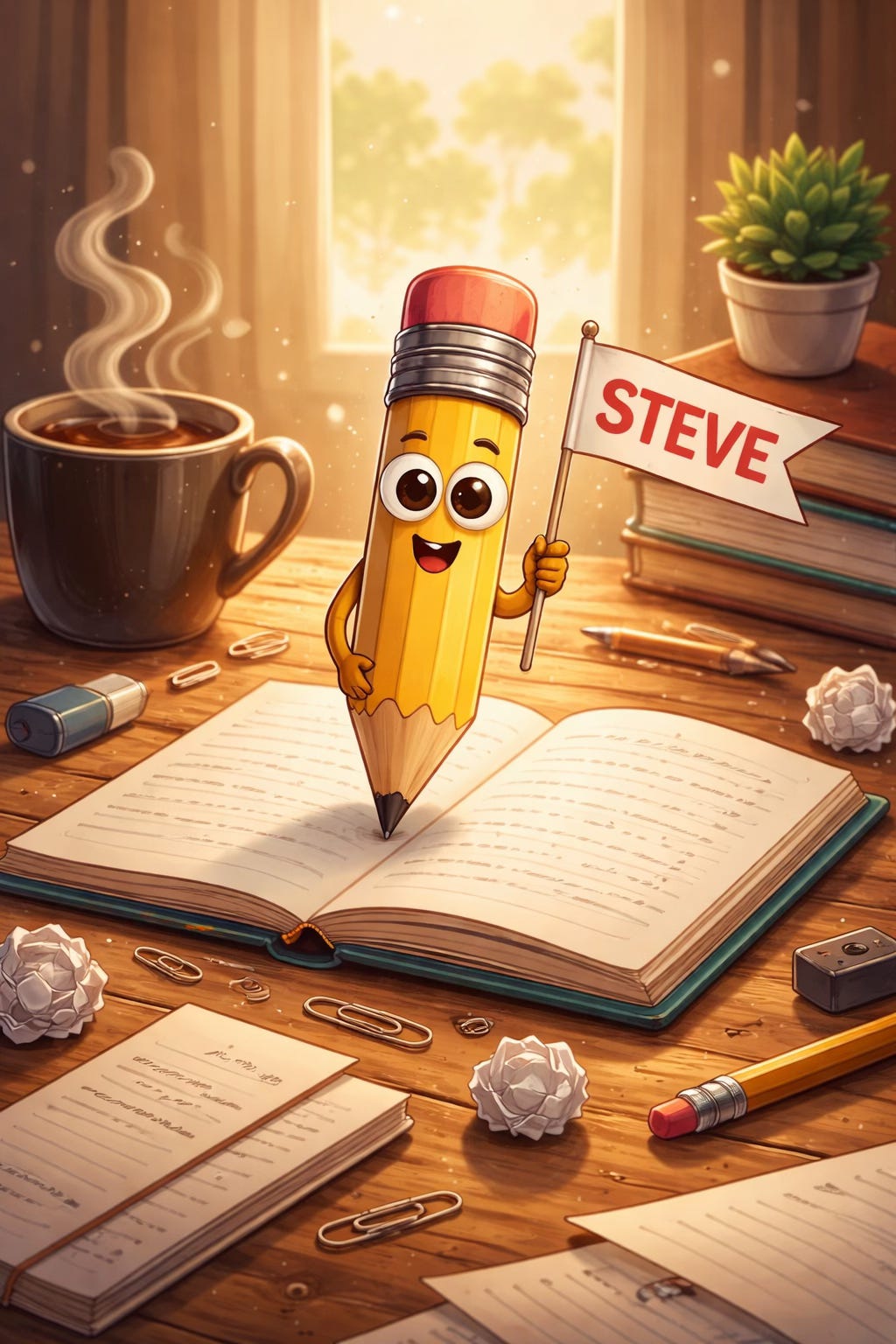
What makes humans different from other animals? We’re the only species on earth that observes Shark Week. Sharks don’t even observe Shark Week, but we do. For the same reason I can pick up this pencil, tell you its name is Steve and go like this (breaks it) and part of you dies just a little bit on the inside. Because people can connect with anything. We can sympathize with a pencil, we can forgive a shark, and we can give Ben Affleck an Academy Award for screenwriting. People can find the good in just about anything but themselves. Look at me. It’s clear to all of you that I am awesome. But I could never admit that. That would make me an ass.
Here are the premises again:
Premise 1a: Everyone has an ultimate concern—an orienting center of value that orders their judgments, sacrifices, and hopes.
Premise 1b: Such an ultimate concern is properly described as religious in nature.
My focus in this post is still Premise 1a. But it is worth naming Premise 1b at the outset, because the connection between ultimacy and religion is not accidental. As we’ve already seen with Tillich, ultimacy is not a decorative layer added to life after the “important stuff” is done—it is the gravity that orders what counts as important in the first place. Once you grant that humans live toward an “end,” you are already admitting that some ends carry the kind of weight we normally reserve for worship—whether we call it that or not.
So then, what does a pencil named Steve have to do with human nature, Aristotelian goodness, ultimacy, and religion?
At minimum, it exposes four distinct features of the human condition:
Symbolic perception and meaning-making
Moral imagination
Universal sympathy (and the risk of misplaced mercy)
The misappropriation of myth (the drift into failed ultimacy)
In this post I will focus on the first two: meaning-making and moral imagination. Together they establish a foundation for why humans inevitably move toward ultimate concerns.
1. Symbolic perception and meaning-making
Human symbolic perception is not enough, by itself, to explain the full difference between human thought and animal behavior; but it is a necessary starting point. To think symbolically is to treat things as signs rather than as random, lifeless objects. We assign names, roles, and significance beyond utility. That tendency transcends survival. It is not merely pragmatic. It is interpretive—an attempt to discern meaning and to live in a world that is more than brute fact.
As a child, I used to think of raindrops sliding across the car window as alive and in a race. I’d assign backstories like, “I’m racing to win back the love of my wife and kids.” I’d call the race like a color commentator and narrate “amazing comebacks” and photo finishes. Of course, it was pure entertainment—but it reveals something true: symbolic perception adds meaning to something that is, on its face, arbitrary. The same is true for a pencil named Steve. If you watch the embedded video of the full Jeff Winger rant, one of the characters, Abed—who loves movies and story in general—becomes fascinated by the broken pencil. Enamored, he tries to force the two broken ends together. But why?
Karen Armstrong captures this human impulse well when she argues that symbolic perception is a major source of mythology:
We are meaning-seeking creatures. Dogs, as far as we know, do not agonize about the canine condition, worry about the plight of dogs in other parts of the world, or try to see their lives from a different perspective. But human beings fall easily into despair, and from the very beginning we invented stories that enabled us to place our lives in a larger setting, that revealed an underlying pattern, and gave us a sense that, against all the depressing and chaotic evidence to the contrary, life had meaning and value.1
While I disagree with her view of myth as purely invented—as if myth is only projection and never discovery—her sentiment remains helpful nonetheless. To be explicit about what I mean here: my “myth realism” is the claim that while many myths are humanly shaped, not all are humanly originated; some are given—whether as revelation, providential memory, or truthful pattern—before they are ever narrated. Humans do not merely receive the world. We interpret it. We story it. And the fact that we do this so naturally already tells us something about the kind of creatures we are.
But symbolic perception, by itself, does not yet explain why some meanings become binding—why certain meanings arrive with moral force rather than mere entertainment. That is where moral imagination enters.
2. Moral imagination
Once we start living by stories, we start living by standards, and that moves us toward universality. Humans do not merely notice patterns—we grasp universals, and we do it with a type of moral imagination. Universal thinking includes concepts like all, ought, and should. It is the belief that certain things should be certain ways. This is the thinking of a moral creature, because it results in phenomena like shame, obligation, guilt, and praise. And when we combine universals with meaning-making, the result is not just “story,” but a moral imagination: a world that is not only described, but judged.
Philosopher Richard Swinburne argues that humans are set apart from animals because of this capacity for universality:
Languageless animals cannot, for example, show understanding of the distinction between universality and mere normality—e.g. between “all crocodiles are dangerous” and “normally crocodiles are dangerous.” The same behavior of fleeing from crocodiles will result, and for each belief the hypothesis that the animal has that belief has the simplicity to give an integrated account of this behavior; either belief could result, by principles of inference which humans use, from sensory stimuli. Hence we cannot attribute to animals our concept of universality (which is so sharply distinct from mere normality).2
Once again, animals can display behavior similar to humans by avoiding danger and employing a kind of proto-morality, but they lack at least two distinctly human capacities. First, humans think in universals, not merely patterns or visceral reactions. Second, humans can distinguish universal/normative claims from mere description. “This is usually dangerous” is practical animal instinct. But “This is truly good,” “This is wrong,” “This is sacred,” and “You ought not do that” are universal and normative claims.
Now the question becomes clearer: why does this lead to ultimacy at all? Why does a moral creature not simply have strong preferences, but an ultimate concern?
The step that is easy to miss is that finitude forces ultimacy. A creature with meaning and moral universals cannot keep all goods equal, because life does not allow it. Time, attention, and risk require tradeoffs. What you will sacrifice sleep for, what you will endure shame for, what you will refuse to lose even at great cost—those realities function as more than preferences. They become a center. And once a center is in place, it begins to order everything else: loves become aligned, fears become intelligible, guilt and pride take shape, and life acquires a felt direction. This is why Tillich’s “ultimate concern” is so helpful: it names the reality or vision of reality that demands the whole person, organizes meaning-making, and quietly becomes the measure by which all other goods are weighed.
So if Premise 1a is true, then ultimate concern is not first a “religious add-on” some people have and others don’t. It is the inevitable gravitational center of human life once meaning and moral universals are in play. A creature that can interpret reality and judge it cannot remain neutral toward it. Such a creature will inevitably rank goods, organize sacrifices, and live toward some end that feels final.
And that brings us back to Winger’s pencil. The point is not that a pencil actually matters—it is that we cannot help but make it matter. We assign names, meanings, and moral weight with startling ease. Part of you dies “just a little bit on the inside” when Steve breaks, because humans do not merely observe reality; we invest it. And once we invest reality, we must also decide what that investment is ultimately for.
The remaining question is not whether humans have ultimate concerns, but where those concerns actually land—what captures our sympathy, what we call mercy, and what we accidentally treat as sacred. That is where the story becomes dangerous, because misplaced weight is the seed of idolatry and the profane
Karen Armstrong, A Short History of Myth (Edinburgh: Canongate Books, 2022), 2.
Richard Swinburne, The Evolution of the Soul (Oxford: Clarendon Press, 1997), 208.