


The Jesus of the Bible is a Skandalon (a stumbling block, snare, or trap trigger).1 I do not have room here to go into all the ways in which He breaks the expectations of those who are with him. Suffice to say, he is a complicated figure who isn’t quite what everyone wants him to be.
One way He is a stumbling block for modern readers is in the idea that the Bible portrays him as the “Jesus of the Whip” and the “Jesus of the Cheek.” We saw a practical example of this stumbling block last week with the Nottingham Unitarians. When faced with the tension between the 'Jesus of the Cheek' and the 'Jesus of the Whip,' they chose to resolve it by simply removing the Whip. They stripped away the judgment to leave behind a safe, passive moral teacher, resulting in a 'weightless gravity' that could not sustain their church.
Modern readers may feel the same. How is it that he can create a whip of cords and drive out the money changers in the temple (Matthew 21:12-17; Mark 11:15-19; Luke 19:45-48; John 2:13-22) and then preach that those who are struck on the right cheek should turn the cheek and offer the other cheek also (Matthew 5:39)? Aren’t those two images contradictory?
Though I don’t wish to synthesize these two views now (since Matthew J Coombe and I are currently writing a book on this and the subject is larger than you might think), I do want to begin to flesh out what I believe the Jesus of the Whip was up to in the cleansing of the temple.
The Hermeneutical Complexity of Interpretations
The narrative of Jesus of Nazareth entering the Jerusalem Temple, fashioning a whip, and expelling the merchants is one of the most vividly remembered yet hermeneutically contested events in the New Testament canon. Found in all four Gospels (Matthew 21:12-17; Mark 11:15-19; Luke 19:45-48; John 2:13-22), this event has historically served as a Rorschach test (ink blot test) for the theological and political presuppositions of the interpreter. For the pietist, it is a localized condemnation of irreverence; for the liberation theologian, it is a prototype of Marxist class struggle; for the lay reader, it is often reduced to a moment of "righteous anger," a divine "temper tantrum" where the humanity of Jesus momentarily eclipses his divinity in a flash of violent impulse.
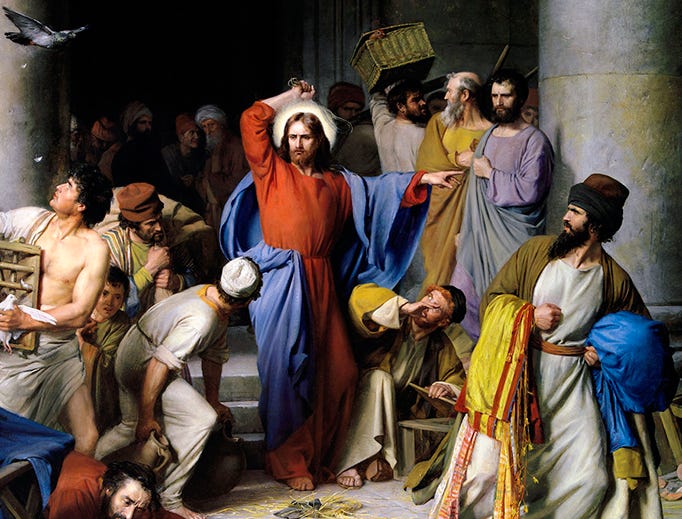
However, it’s my view that these various interpretations fail to synthesize the larger context of the First Century Roman world with the legal theology of the Ancient Near East (ANE). The cleansing was neither a riot nor a temper tantrum nor a politically centered protest, but instead it was a calculated, formal Prosecutorial Action initiated by the Suzerain against a Vassal priesthood that had fundamentally breached the stipulations of their treaty.
If this was indeed a legal prosecution, we must analyze the weapon John claims the Prosecutor wielded—a weapon that, in the Roman mind, signaled the absolute power of the state.
The Roman Flagrum as the Instrument of State Terror
The term “whip of cords” (phragellion ek schoinion) is a choice of terminology found in John 2:15. Specifically the word phragellion, used uniquely in John 2:15, is a Latin loanword derived from flagellum.2 This word, to the imagination of a first century reader, would have been loaded with meaning.
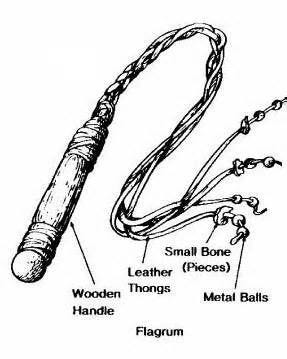
Historical sources distinguish between numerous tools of punishment, ranging from mild to lethal. These included the ferula (a stick used by teachers), the scutica (a lash or whip), the virga (rod), and the fustis (staff or cudgel). At the most severe end of this spectrum was the flagrum or flagellum (the scourge). Roman writers like Seneca the Elder noted the terrifying nature of the scourge (horribili flagello), distinguishing it from the lash by its ability to cause deep wounds and lacerate the flesh. Horace famously argued for proportional justice, warning that one should not “flay with the terrible scourge” a person who only deserved the lighter lash.3
Citizenship played a big role in how people were punished. Citizens in the military context were only punished via castigatio, using a dry grapevine (vitis) carried by centurions. The illegal use of rods on a citizen was a serious offense, famously prosecuted by Cicero against Verres and invoked by the Apostle Paul to stop his own interrogation in Jerusalem. Non-citizens, such as foreigners, slaves, and gladiators did not share these protections and were subject to the harsher rods and scourges. In the home, a master had the discretion to choose between the stick, lash, or scourge for his slaves.
The flagrum was used in flagellation, which was feared due to its brutality. Andrea Nicolotti comments:
“Flagellation was much feared due to its brutality: it produced deep wounds and, in some cases, could even lead to death. Unlike Jewish law, which established a ceiling of forty lashes, Roman law did not provide for any limitations. Flavius Josephus offers various accounts of flagellations carried out in Palestine in which the strokes were delivered with such strength that they exposed the bowels and bones of the unfortunate suffered, and confirms that the practice of scourging, as occurred with Jesus, was used as a sort of prelude to crucifixion…”4
This is well documented throughout the historical record, with a particularly chilling account by Eusebius, in his Ecclesiastical History, when talking about the scourging of early Christian martyrs:
“For they say that the bystanders were struck with amazement when they saw them lacerated with scourges even to the innermost veins and arteries, so that the hidden inward parts of the body, both their bowels and their members, were exposed to view; and then laid upon sea-shells and certain pointed spits, and subjected to every species of punishment and of torture, and finally thrown as food to wild beasts.”5
Because flagellation was a punishment reserved only for non-citizens and slaves, it was a symbol of status. For a people or person to be punished by scourging was to say that people group or person had a lack of status. When the Roman soldier wielded the flagrum, he was acting as an agent of Caesar, enforcing the authority of Caesar through the threat of bodily destruction.
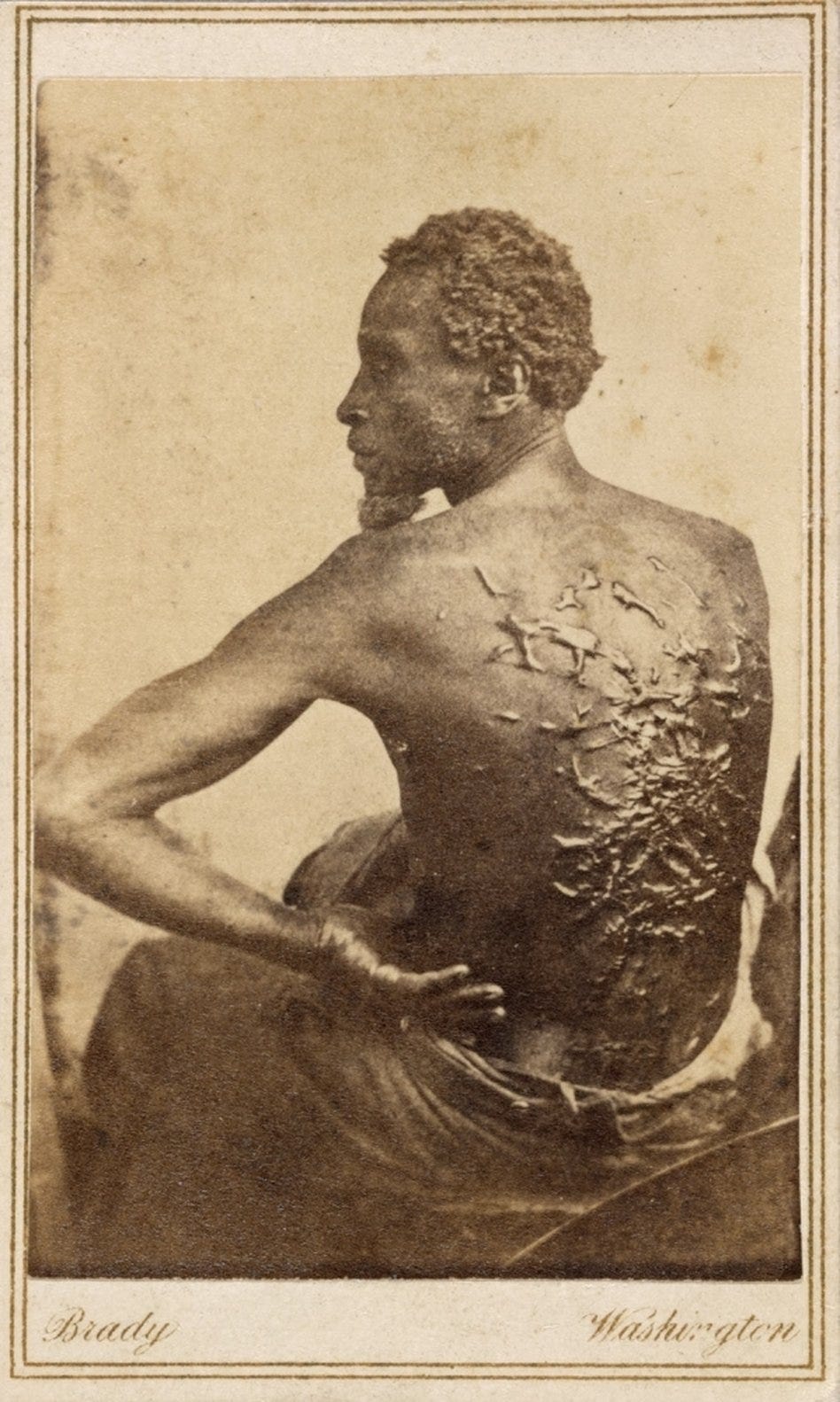
The Romans often used this to pressure populations into terror and panic. Josephus records of a famine during the Jewish Wars which made those sieged willing to go out of the city to look for food. But while out, they were taken by their enemies. They were first whipped, then tormented, then they died by crucifixion before the walls of the city. Titus apparently felt bad for the Jews, but he allowed for the cruel treatment because “he hoped the Jews might perhaps yield at that sight, out of fear lest they might themselves afterwards be liable to the same cruel treatment.”6
Is the Jesus of the Whip the same as the Roman of the Whip?
It seems insane that the word used by John in John 2:15 is phragellion. In light of the historical background, it seems that the author should want to distance Jesus, the same Jesus who said turn the cheek, from this tool of torture. Not only was the instrument cruel, but it was a sign of oppression among the Jews and was greatly feared and hated.
Next post I’ll get into why I think the author uses this word and why it is the perfect word choice for describing what Jesus is doing at the cleansing of the temple. Here is a hint: The answer lies in the specific Greek phrase John attaches to the whip—ek schoinion—and how a Suzerain King acts when he finds his own house in disorder.
"Strong's G4625 - Skandalon," Blue Letter Bible, accessed January 1, 2026, https://www.blueletterbible.org/lexicon/g4625/kjv/tr/0-1/.
"Strong's G5417 - Phragelloō," Blue Letter Bible, accessed January 1, 2026, https://www.blueletterbible.org/lexicon/g5417/kjv/tr/0-1/.
For more details, see: Andrea Nicolotti, “The Scourge of Jesus and the Roman Scourge: Historical and Archaeological Evidence,” Journal for the Study of the Historical Jesus 15, no. 1 (2017): 1-3.
Andrea Nicolotti, “The Scourge of Jesus and the Roman Scourge: Historical and Archaeological Evidence,” Journal for the Study of the Historical Jesus 15, no. 1 (2017): 3.
Eusebius, Church History 4, trans. Arthur Cushman McGiffert, in Nicene and Post-Nicene Fathers, 2nd ser., vol. 1, ed. Philip Schaff and Henry Wace (Buffalo, NY: Christian Literature Publishing Co., 1890), rev. and ed. Kevin Knight, New Advent, accessed January 1, 2026, https://www.newadvent.org/fathers/250104.htm.
Josephus, The Jewish War 5.450, trans. William Whiston, Lexundria, accessed January 1, 2026, https://lexundria.com/j_bj/5.450/wst.